B2B Sales Guides
Deep, practical playbooks on Answer Engine Optimization, AI in B2B sales, and modern sales technology — the methods behind the SalesEvolution system.
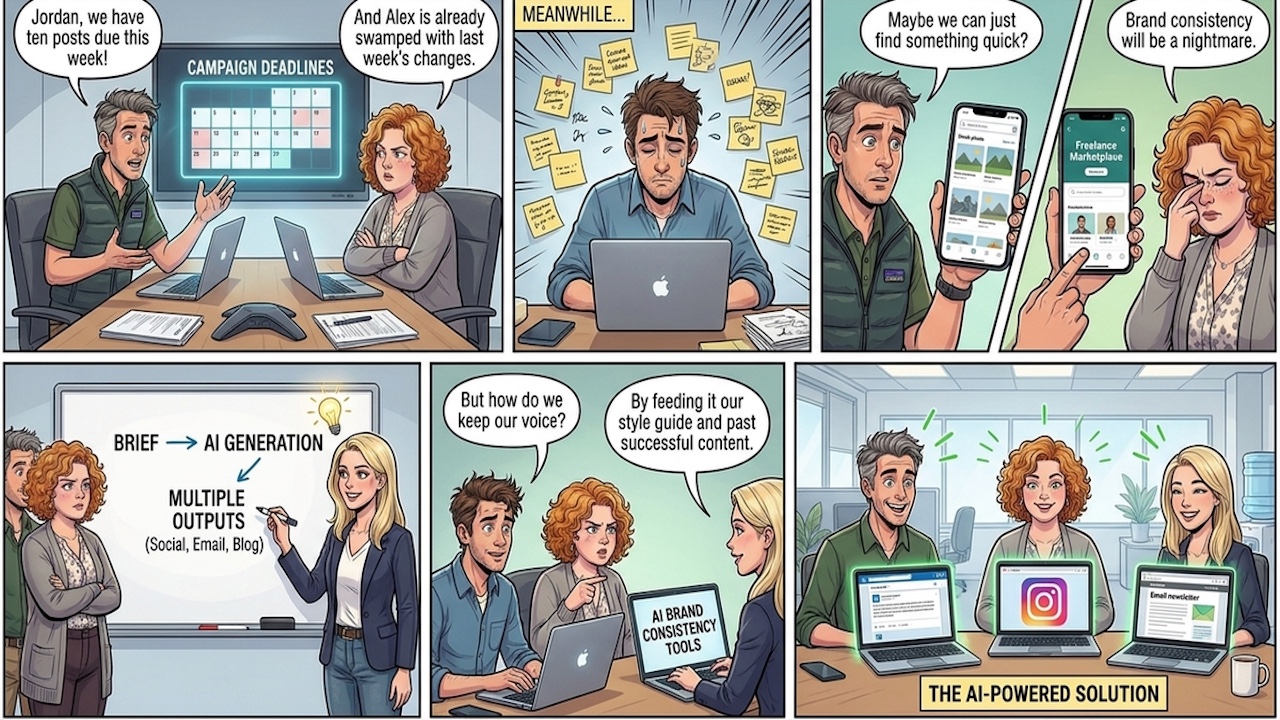
The Content Creation Bottleneck: Why B2B Marketing Can't Keep Up With Campaign Speed
Campaigns now demand more channels, more formats, and more personalization than ever — on shorter timelines and flatter budgets. Here's why the traditional content production model breaks under that load, and what actually replaces it.
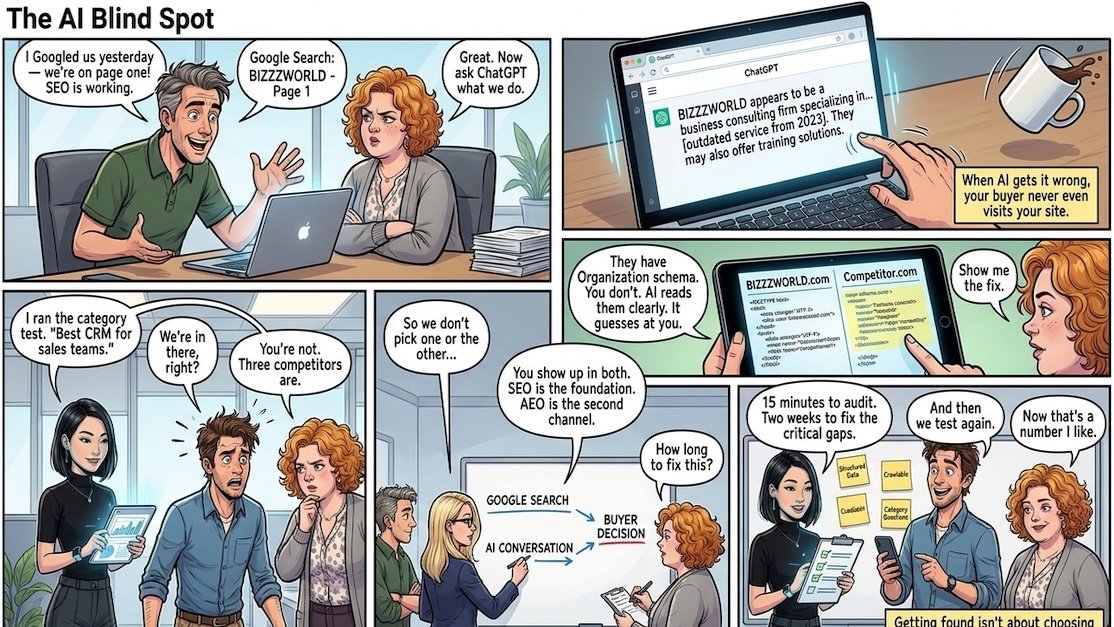
How to Check What AI Sees About Your Company (And Why SEO Still Matters)
SEO didn't die — but a growing share of buyers now research and brainstorm inside ChatGPT, Claude, Perplexity, and Gemini before they ever open a search bar. Here's a practical, no-tools-required way to check what AI currently sees about your company, and why you need both channels, not one instead of the other.
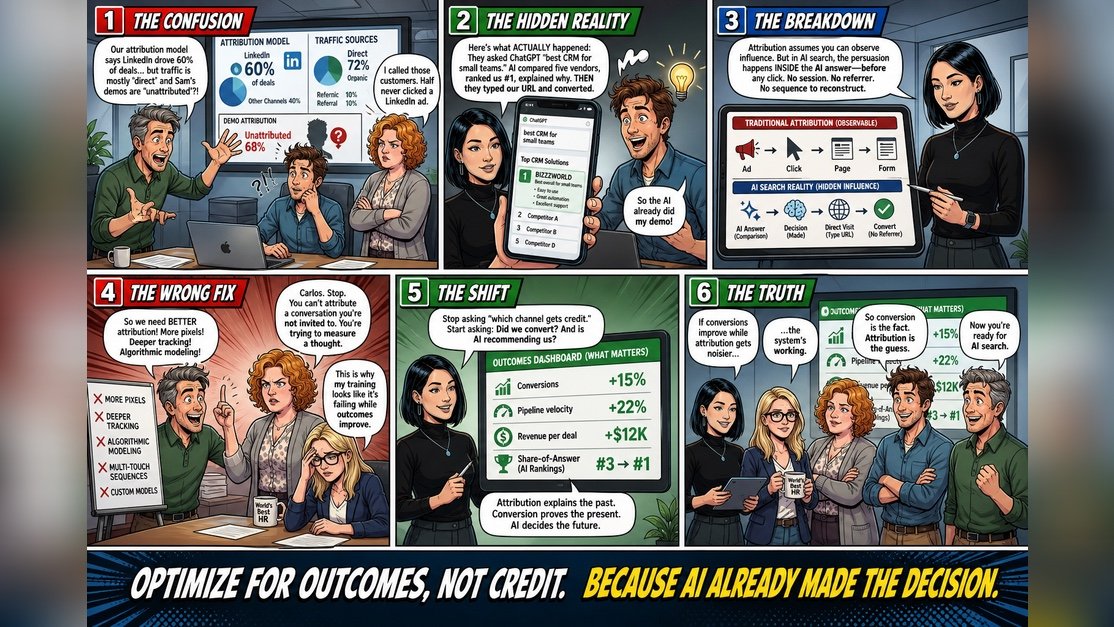
Attribution vs Conversion: Why AI Search Breaks Measurement and Conversion Becomes the North Star
Attribution and conversion are not the same thing, and confusing them leads to misallocated spend and false confidence. As AI search and answer engines mediate the buying journey, attribution breaks by design — and conversion becomes the only verifiable signal left. Here's how to think about it and what to measure instead.
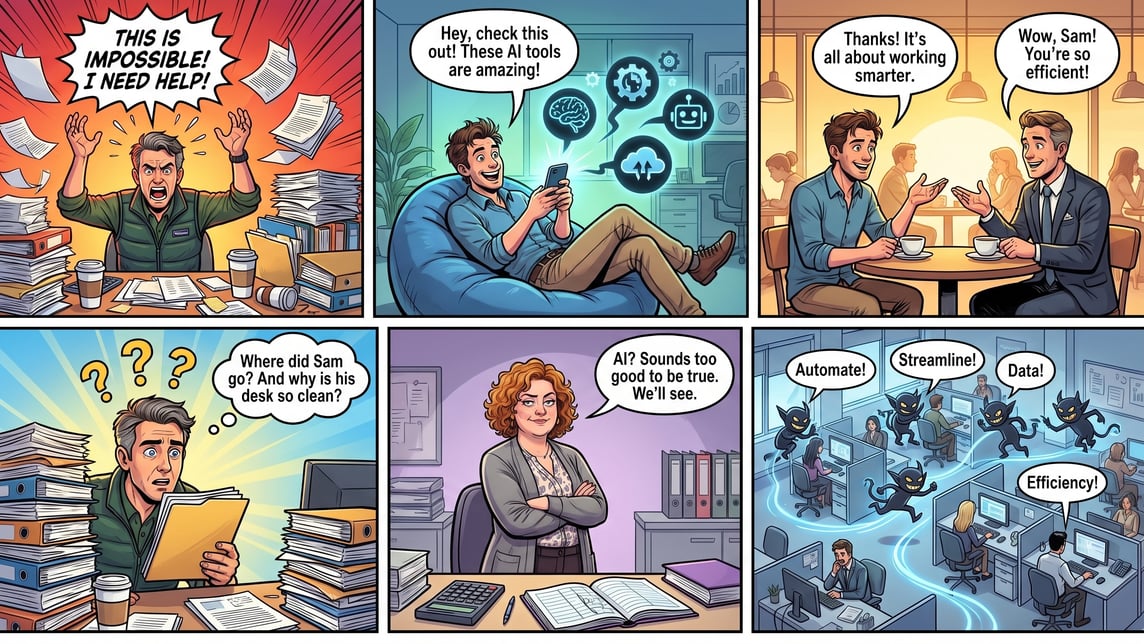
Shadow AI in Sales: Your Reps Are Already Using It — The Only Question Is Whether You Know
Across B2B sales teams, reps are quietly pasting deals, emails, and call notes into ChatGPT and other tools their company never sanctioned. This is 'shadow AI' — and the research is clear that punishing it only drives it deeper underground. Here's how to surface it and turn it into an advantage.
Building a Digital Sales Strategy: Why AI Can't Be a Bolt-On
AI delivers results only inside a cohesive, organization-wide sales strategy — never as a tactical add-on. That means defining your goals for AI, aligning it to your value proposition, integrating sales, marketing, and IT, auditing your infrastructure, and updating the KPIs you measure success by.
The Human-AI Sales Assemblage: Why the Future Is Collaboration, Not Replacement
AI is not built to replace the B2B salesperson — it's built to combine with them. The future of selling is a human-AI assemblage that pairs the machine's data-processing power with the human's empathy, intuition, and relationship skill. Here's how to design that partnership.
Partner Relationship Management Meets AI: Running Indirect Sales Channels Smarter
Many B2B firms sell through global networks of channel partners — and managing them is its own discipline. AI-integrated Partner Relationship Management (AI-PRM) streamlines supplier-reseller collaboration, automates processes, and boosts the financial value of indirect channels.
AI in CRM: From Data Graveyard to Next-Best-Action Engine
For most teams the CRM is a data graveyard reps resent updating. AI flips that — automatically capturing interactions, preventing data decay, and turning the system into a proactive next-best-action engine with a true 360-degree view of every buyer.
The Ethical Use of AI in Sales: Privacy, Bias, and Transparency as Competitive Advantages
AI in B2B sales runs on sensitive customer data and opaque models — raising real risks around privacy, bias, and trust. Treating ethics as a core part of the strategy, not an afterthought, protects buyers, employees, and the relationships your revenue depends on.
Unlearning Traditional Sales Habits: The Prerequisite for AI That Actually Works
Adding AI to outdated sales habits just automates the dysfunction. Real transformation requires unlearning — consciously discarding obsolete routines and beliefs, from 'trust is only built face-to-face' to gut-driven decisions. It's uncomfortable, identity-level work, and it's the prerequisite for everything else.
Answer Engine Optimization (AEO): How B2B Buyers Now Find Vendors Through AI
B2B buyers increasingly ask ChatGPT, Perplexity, and Google's AI Overviews for vendor recommendations instead of scrolling search results. Answer Engine Optimization (AEO) is how you get named in those answers. Here's how it works and how to do it.
The Rise of Inside Sales: Why B2B Selling Moved Remote — and Stayed There
Inside sales — selling remotely rather than in the field — has become a permanent fixture of B2B, driven by video, analytics, and AI. It cuts travel cost, multiplies daily contacts, and works best as a hybrid with field reps. Here's what the shift means for how you structure a team.
Tool or Person? Instrumental Efficiency Versus Existential Meaning
Is work a tool for extracting performance, or a central part of life where people seek dignity and meaning? A sharp modern critique argues that treating people purely as resources may produce growth for a while but risks the trust an economy depends on. The proposed fix isn't compromise — it's chasing human flourishing as a genuine goal alongside results.
Rewarding A While Hoping for B: The Folly of Misaligned Incentives
Companies talk earnestly about long-term growth, teamwork, and fresh ideas — then pay people for short-term earnings, individual output, and playing it safe. People respond to what's rewarded, not what's preached, and then leaders act surprised. Closing that gap is the heart of turning strategy into reality.
Digital Transformation and Sales Enablement: Equipping Teams to Actually Use the Tools
Sales enablement is the dynamic capability that decides whether your AI tools get adopted or abandoned. It systematically equips reps with the resources, content, and training to sell — bridging strategy and frontline execution. Here's why it's the difference between transformation and shelfware.
Strategy or Class? Two Theories of Interlocking Directorates
Why do the same people sit on the boards of several companies? One theory sees calculated firms managing uncertainty; another sees a tight-knit elite keeping its interests aligned. Both predict the same web of board connections — a useful lesson about when data alone can't crown a winner between theories.
The Value of B2B Social Selling: Turning Cold Calls into Warm, Contextual Introductions
Social selling uses platforms like LinkedIn to research, engage, and build trust with B2B buyers before the first real conversation. Done well — with the right training, content, and ethics — it replaces cold outreach with warm, contextual introductions.
Overcoming Algorithm Aversion: Getting Your Sales Team to Trust AI
The biggest barrier to AI in sales isn't the technology — it's trust. 'Algorithm aversion' makes reps abandon AI after a single error, distrust the black box, and fear for their autonomy. The fix is trust design: give people control, explain the model, frame it as an assistant, and teach the skills to collaborate.
Bold Visionary or Steady Hand? Narcissism in the Corner Office
Boards choose between flashy, larger-than-life leaders and quieter, steadier ones. The research complicates the popular favorite: highly self-centered chief executives don't raise average returns — they widen the range, producing spectacular wins and spectacular disasters. Picking one is a bet on volatility, not performance.
Position or Capability? Competitive Forces Versus Dynamic Capabilities
Does lasting advantage come from holding a strong market position or from being unusually good at reinventing yourself? The two aren't rivals but a sequence: position protects today's profits, and the capability to adapt secures the power to win again once today's advantage fades.
AI Sales Coaching for B2B Teams: What It Is and How It Actually Works
AI sales coaching gives every rep daily, personalized practice and feedback that a human sales manager can't deliver at scale. Here's what it covers, where it helps most in a B2B hunter team, and how to roll it out without it becoming shelfware.
The Dark Side of Sales Technology: Technostress, Surveillance, and Burnout
Digital transformation has a downside leaders ignore at their peril: information overload, technostress, oppressive monitoring, isolation, and burnout. A sustainable sales force balances technological efficiency with human well-being — here's how the tensions form and how to manage them.
Act Now or Wait? The Bias for Action Versus Justified Inaction
When something goes wrong, managers can fail in two opposite ways: acting so hard the cure causes worse problems, or waiting in denial until it's too late. Both can be ruinous, so 'just do something' is no safe bet. The real wisdom is in the diagnosis, not the disposition.
Automate or Cultivate? Reengineering Versus Knowledge Management
Does value come from streamlining the work or nurturing people's know-how? Reengineering used technology to automate processes and risked discarding hard-won human expertise. Knowledge management points the same tools at the opposite goal — supporting and connecting skilled people. The grown-up question isn't whether to use technology, but how.
Dynamic Pricing in B2B Sales with AI: From Gut-Feel Discounts to Data-Driven Deals
B2B pricing is a maze of negotiations, custom bundles, and discretionary discounts. AI turns it into a dynamic decision-support system — analyzing transaction history, market conditions, and willingness to pay to suggest terms that win deals without leaking margin.
Top Management's Role in Sales Digitalization: Why AI Adoption Lives or Dies at the Top
AI tools don't transform a sales organization — leaders do. Digital transformation depends on visible commitment from the very top: funding, vision, culture, structure, ethics, and hiring. Here's what executive sponsorship actually requires, and why initiatives stall without it.
One Best Way, or It Depends? The Universality Debate in Management Practice
Is there one right way to run a company, or does it depend on the situation? The 'best practice' view says proven basics work everywhere; the 'contingency' view says good management fits context. Experiments settle it in two parts: a core of basics reliably works, and firms tune the details from there.
Structure or Culture? Two Macro Paradigms of Organizing
Management thinking swings between designing companies around clear structure and around shared culture, each era fixing the other's excesses. But in practice the supposed opposition dissolves: successful firms build clear structures and bring them to life with a strong culture — the skeleton and the lifeblood of the same body.
Data or Gut? Evidence-Based Management Versus Intuition
Managers should base decisions on solid research — yet many brush the evidence aside and trust their gut. Decades of effort show that simply presenting better data rarely closes the gap, because beliefs are tied to identity. Closing it is as much about persuasion as about science.
AI and Sales Management: From Admin Burden to Strategic Leadership
AI automates the reporting and tracking that consume a sales manager's week, gives real-time pipeline visibility, surfaces what top performers do differently, and sharpens forecasts — freeing managers to do the strategic leadership only they can.
Stakeholder Mapping and MEDDPICC: A Practical Guide for Complex B2B Deals
Enterprise deals are won or lost on how well you understand the people behind the logo. This guide shows how to map stakeholders, read the political landscape, and use MEDDPICC to qualify ruthlessly and de-risk complex B2B opportunities.
My Career or Our Credibility? A Social Dilemma in Management Science
Academic careers quietly pit each researcher's interests against the good of the field. Polishing results to publish helps the individual but fills the literature with false findings. Because the trap is built into the system, the cure has to be too — coordinated rules, not lonely heroes.
Post-Sale Follow-Up and AI: Turning Retention into a Strategic Advantage
The B2B sale doesn't end at signature. AI automates follow-up, predicts churn and lifetime value, flags the best upsell moments, and powers 24/7 support — turning what used to be an administrative chore into a retention engine.
Pay for Output or Pay for Risk? Incentives Versus Innovation
Paying people directly for output lifts everyday productivity — and quietly trains them to avoid the risky experiments that breakthroughs require. The fix isn't to abandon incentives but to match the reward to the work: tight output-based pay for routine tasks, failure-tolerant long-term pay for creative ones.
Closing B2B Deals with AI Assistance: Data-Driven Technique, Human Commitment
Closing is the high-stakes stage. AI recommends the right closing technique, predicts the odds of winning, optimizes pricing, and automates the contract grind — but the human still secures the emotional commitment that actually closes the deal.
Direct or Delegate? The Middle Manager's Paradox of Organizing
Middle managers are told to enforce changes exactly as designed and to empower their teams to decide for themselves — at the same time, about the same people. The way through isn't solving the contradiction but reframing it: set the destination firmly, stay flexible on the route.
Overcoming Customer Objections with AI: Anticipate, Respond, and Stay Human
AI helps salespeople anticipate objections before they arise, surface the best response in real time, and read hidden hesitation through sentiment analysis. But empathy — the part that actually resolves a buyer's fear — stays human.
Leave Us Alone, or Bring in Help? Team Autonomy Versus External Knowledge
Self-managing teams face a tension between freedom and connection. Autonomy buys speed and focus; outside knowledge buys breadth and alignment. Treated as an either-or, each gain costs the other — but the research says the strongest teams run both at high levels, because each guards against how the other fails.
Enhancing B2B Sales Presentations with AI: Real-Time Feedback and Personalized Pitches
AI can monitor a live pitch, give real-time feedback on delivery, surface the right data on demand, and generate personalized slides — turning the sales presentation from a static deck into a responsive, tailored conversation.
Adapt or Hold Steady? Whether Change Helps or Hurts Survival
Does changing a company help it survive or push it toward failure? Both, at different times. The act of changing disrupts the routines a firm depends on and raises short-term failure risk — yet finishing a change successfully leaves it better matched to its world. Change is risky now and rewarding later.
AI and the Sales Approach: Automating Outreach Without Losing the Human Touch
The approach stage is about building rapport and trust. AI can automate the mechanics — scheduling, timing, personalization, even first-line chatbots — but the human still has to build the relationship. The win is in the blend.
Progress or Fad? Why Managers Adopt New Techniques
When a new management technique sweeps the business world, is it genuine progress or just fashion? The honest answer is both: real economic pressures create real performance gaps, and trend-setters fill them with solutions wrapped in hype. The manager's job is to tell the water from the foam.
The Pre-Approach: Using AI to Walk Into Every B2B Conversation Prepared
The pre-approach is the intelligence-gathering you do before you ever contact a lead. AI now delivers deep prospect and market intelligence, competitive battlecards, and optimal timing — so every first conversation is relevant from the first sentence.
Rigor or Relevance? The Identity Crisis of Management Research
Management research is pulled between being scientifically careful and being useful to real managers. The two seem to tug apart — but they don't have to. The way out is timing: aim rigorous methods at the problems managers are about to face, and research becomes both solid and genuinely useful.
AI in Prospecting and Lead Generation: Finding and Ranking the Right B2B Buyers
Prospecting is the first stage of the B2B funnel — and the one AI improves most. With data-driven lead scoring and ideal-customer modeling, AI finds the buyers most likely to convert and strips the grind out of qualification.
Generative AI for Sales Content: Personalized Outreach Without the Manual Grind
Generative AI drafts personalized emails, builds collateral, summarizes calls, and generates objection responses — acting as a co-worker for the modern salesperson. But the human still has to review before sending. Here's how to use it well.
Sharpen the Saw or Search the Forest? Exploitation Versus Exploration
Every company must split limited money and effort between getting better at what it already does and trying new things. Lean too far either way and you fail. The smart fix isn't forcing each team to do both — it's designing the organization so exploration and exploitation each have a protected home.
Machines or People? Scientific Management Versus Human Relations
Early management swung between two views of workers: cogs in a machine to be optimized, or people whose motivation and relationships drive output. The history shows the choice was false — the two traditions blended, and the best systems design the work carefully and look after the people doing it.
Natural Language Processing in Sales: How AI Reads Emails, Calls, and Sentiment
Natural Language Processing lets AI understand human language — analyzing emails, transcribing calls, gauging sentiment, and detecting buying intent in real time. Here's how NLP changes the way B2B teams listen to customers.
Machine Learning in B2B Sales: Turning Raw Data into Revenue Intelligence
Machine learning is the engine behind most 'AI in sales' — it learns patterns from your sales data without being explicitly programmed, powering forecasting, segmentation, and dynamic pricing. Here's what it does and where it creates value.
Do Executives Matter? Strategic Choice Versus Structural Inertia
When a company soars or crashes, we praise or blame the people at the top. But do leaders really decide a firm's fate — or are they riding currents set long before they arrived? The idea of 'managerial discretion' reconciles the debate by asking not whether bosses matter, but where and how much.
Introducing AI to B2B Sales: What It Actually Does and Why Adoption Is Still Hard
AI in B2B sales processes vast customer data, predicts buyer behavior, automates routine work, and augments reps with next-best actions. Sales and marketing are expected to lead AI adoption — yet effective adoption remains a real challenge. Here's why.
The Triumph of Nonsense: Why So Much Leadership Theory Rings Hollow
A wave of critical scholarship argues that management and leadership studies have drifted into jargon, faddishness, and relentless positivity — losing meaning along the way. For leaders drowning in buzzwords and guru frameworks, the critique is liberating: skepticism toward shiny theory is a strength, not cynicism.
Maslow Never Drew the Pyramid: What the World's Most Famous Management Model Gets Wrong
The hierarchy-of-needs pyramid appears in nearly every management course on earth. It was never drawn by Maslow. Historians traced the icon to others who simplified — and distorted — his ideas decades later. The lesson isn't about Maslow; it's about how uncritically we accept the 'truths' management teaches.
The Evolving B2B Buyer: How Purchasing Behavior Changed and How Sellers Must Adapt
Today's B2B buyers are more informed, more in control, and increasingly prefer digital self-service — some even want a seller-free experience. Salespeople have lost their information advantage. Here's what buyers now expect and how to win them.
Why Capable Companies Freeze: Strategic Inertia and the Trap of Managerial Cognition
Polaroid invented much of the digital imaging technology that destroyed it — and still failed. The classic study shows the killer wasn't a capability gap but managerial cognition: leaders' mental models of 'how we make money' filtered out the future they could plainly see. It's the most relevant cautionary tale of the AI era.
Digital Transformation in B2B Sales: Why It's Organizational Change, Not a Software Upgrade
B2B sales is undergoing a structural digital transformation across every industry — accelerated by the pandemic, driven by data and AI, and demanded by changing buyers. The organizations that win treat it as systemic change, not a new tool.
Why the Best Leaders Keep Doing the Dirty Work: Authority Is Built, Not Delegated
Conventional wisdom says leaders should delegate the grunt work and rise above it. Research on how professionals actually earn authority suggests the opposite: holding on to the unglamorous, hands-on 'scut work' is precisely how credibility and real understanding are produced. For sales leaders, staying close to the work is a feature.
Does Management Actually Matter? The Evidence Says Yes — and It's Causal
Is good management a real driver of performance or just a story winners tell? Two landmark studies — a global survey across thousands of firms and a randomized field experiment — settle it: structured management practices vary enormously, track hard outcomes, and causally raise productivity. Basic blocking and tackling is undervalued.
The Pundit Who Called the Crash: Why a Spectacular Correct Prediction Can Signal Poor Judgment
The analyst who called the last crash gets crowned an oracle. But counter-intuitive research shows that successfully predicting an extreme, unlikely event is, on average, a marker of worse overall forecasting judgment — not better. Here's why you should distrust the one-hit prophet.
It's All About Me: How Narcissistic Leaders Produce Big Wins, Big Losses, and Little in Between
Narcissistic chief executives don't just have big egos — they drive measurably different strategies. Landmark research shows they favor bold, attention-grabbing moves and deliver extreme, fluctuating performance: more dramatic, not more reliable. For anyone hiring or promoting leaders, the pattern is a warning.
CEO Overconfidence and Investment: When Belief in Your Own Judgment Distorts Capital
Overconfident CEOs overestimate the returns to their own decisions — and it shows up in how they invest. Landmark research found their investment becomes highly sensitive to internal cash flow, over-investing when flush and under-investing when constrained. The bias is measurable, and consequential.
Managerial Miscalibration: Why Executives Are Systematically Too Sure of Themselves
When senior managers forecast the future, they get the range wrong — badly. A landmark study of thousands of executive predictions found their confidence intervals were far too narrow, capturing reality only a fraction of the time. For sales leaders who forecast for a living, this is a direct warning.
Rewarding A While Hoping for B: The Reward-System Trap Every Sales Leader Falls Into
Kerr's classic warning is timeless: organizations routinely reward one behavior while hoping for another, then act surprised when they get exactly what they paid for. For sales leaders — whose teams are wired to comp plans — this is the single highest-stakes design decision they make.
When the Cure Causes the Disease: Organizational Iatrogenesis and the Action–Inaction Trap
In medicine, iatrogenesis is harm caused by the treatment itself. Organizations suffer the same affliction: confident managerial 'fixes' that create new, worse problems. Leaders are caught between the harm of acting wrongly and the harm of failing to act — and both are real.
Solving the Wrong Problem: The Type III Error That Wastes Brilliant Execution
The most demoralizing failure in management isn't getting the answer wrong — it's getting the right answer to the wrong question. A Type III error means flawlessly solving a problem that was never the real one. For sales leaders, it's the difference between effort and impact.
False Negatives and Avoidable Disasters: When Leaders Ignore a Real Threat
A Type II error — the false negative — is failing to recognize a causal relationship that genuinely exists. Dismissing real warning signs as noise lets problems metastasize into full-blown crises. True leadership means staying alert to threats the early data seems to deny.
The Danger of False-Positive Decisions: When Leaders See Causes That Aren't There
A Type I decision error — the false positive — is believing a causal link exists when it doesn't. Acting on these illusions of validity sends organizations chasing strategies that never worked, and complexity makes the trap more likely. Here's how to avoid it.
Expert vs. Heuristic Intuition: Why a Leader's Gut Is Only as Good as Their Domain
Not all gut feel is equal. Expert intuition, built on years of domain-specific pattern recognition, can be remarkably accurate. Heuristic shortcuts applied across unrelated domains systematically mislead. The difference decides whether instinct is an asset or a trap.
Intuitive Decision-Making in Management: When Gut Instinct Is a Feature, Not a Flaw
Under complexity and time pressure, managers and sales leaders lean on intuition — rapid, nonconscious, holistic judgment. Used in the right conditions it's a genuine strength; used in the wrong ones it's a liability. Here's what the research says about when to trust it.